A USEFUL HANDMADE PROJECT
Fold a Paper Diamond Pocket
A diamond-oriented square makes a decorative pocket with a simple glued closure instead of a locking fold.
Start with your materials ↓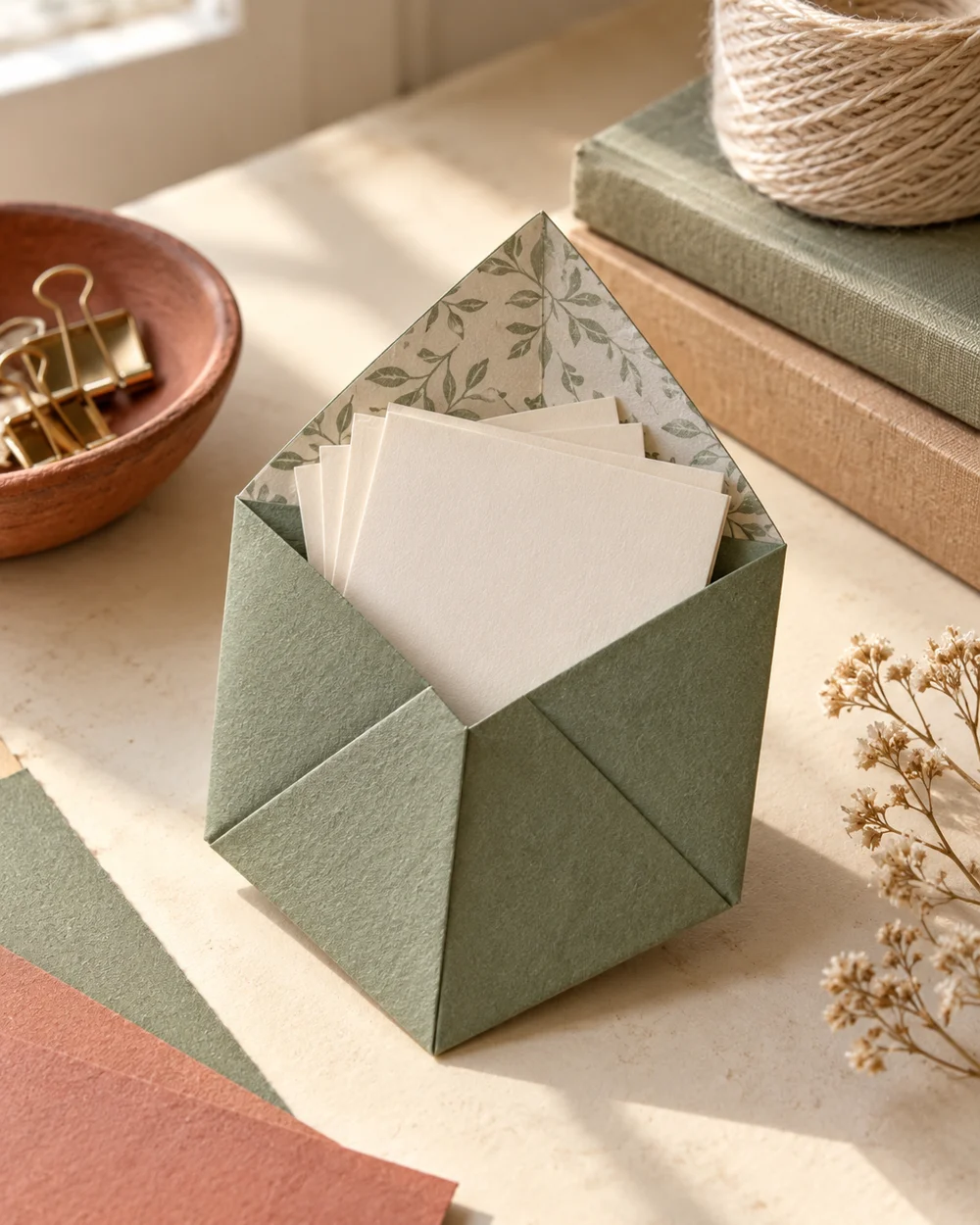
WHAT TO GATHER
Your starting kit.
- Plain paper or cardstock suited to the folds described below
- A ruler, pencil, and scissors
- Paper glue and scrap paper for protecting the work surface
- A blunt folding tool for scored creases
STEP 01
Measure and prepare
Begin with a 150 mm paper square and rotate it into a diamond.
STEP 02
Lay out the construction
Fold the bottom point upward past the center; fold the left and right points across one another with a small overlap.
STEP 03
Join and shape
Glue the overlapping side points to each other without sealing the pocket interior. Fold the top point down as a flap.
STEP 04
Check the result
This version is a glued decorative pocket, so it does not depend on a complicated locking fold. Let glued joints dry according to the adhesive instructions. Compare the finished shape with its intended use: moving parts should move freely, open pockets should remain open, and supporting folds should sit level. Trim only a little at a time if a paper edge catches.
STEP 05
Finish and keep
Remove temporary pencil guides with a clean eraser where the paper allows it. Store the finished piece somewhere dry and avoid putting pressure on raised or rolled details. Keep your first scrap-paper version nearby if you want to change the dimensions next time.
Before you begin.
Can I change the paper size?
Yes. Make a scrap version first and keep the same fold sequence. Where a piece wraps another object, measure the actual object and add space for its thickness instead of enlarging only one dimension.
What should I check before beginning?
This version is a glued decorative pocket, so it does not depend on a complicated locking fold.
Original editorial project guidance. Images are AI-generated concepts, not photographs of tested finished projects. Practice on inexpensive materials and follow tool and material instructions. Sources & approach.
Save to Pinterest ↗KEEP THE THREAD GOING