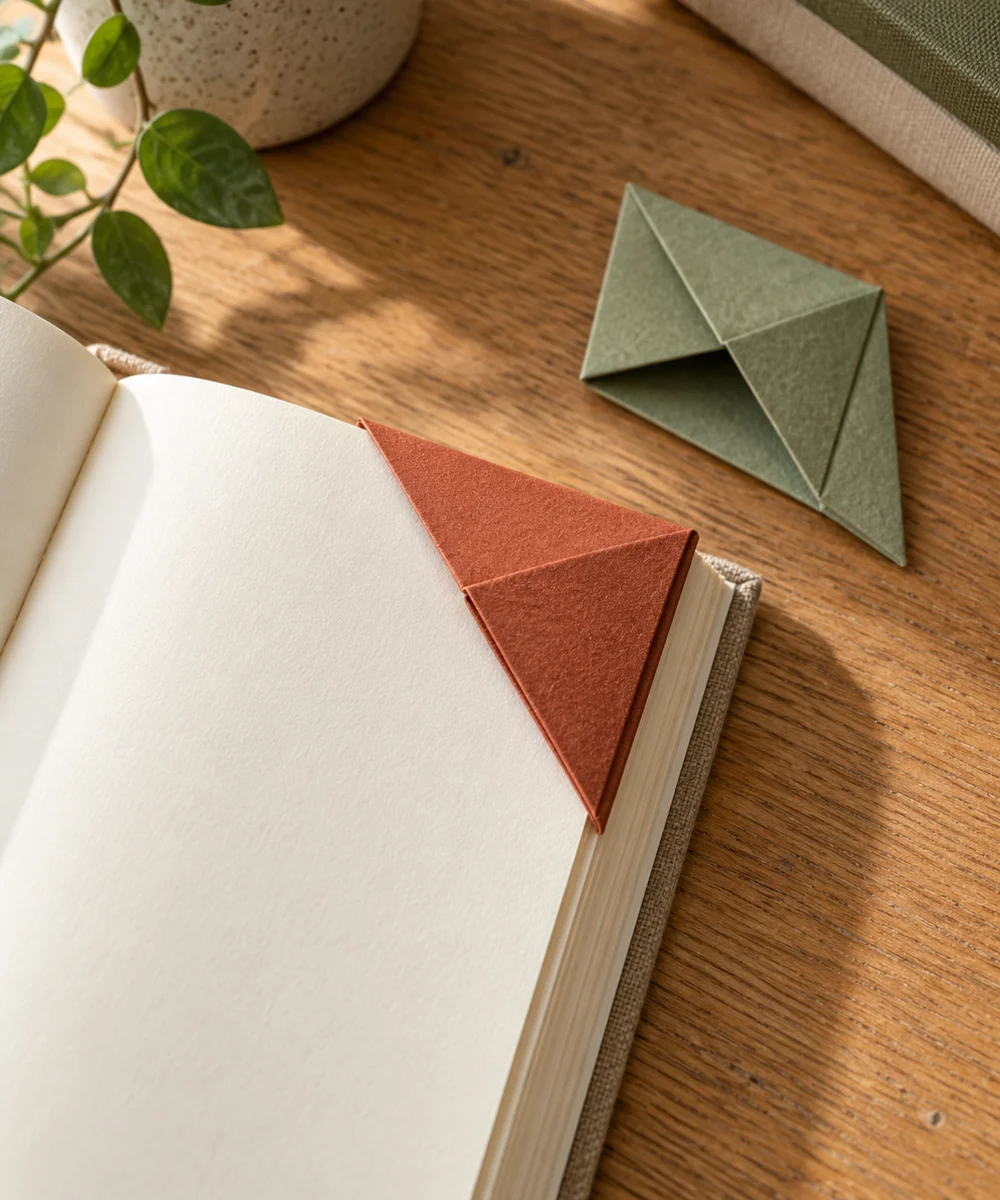
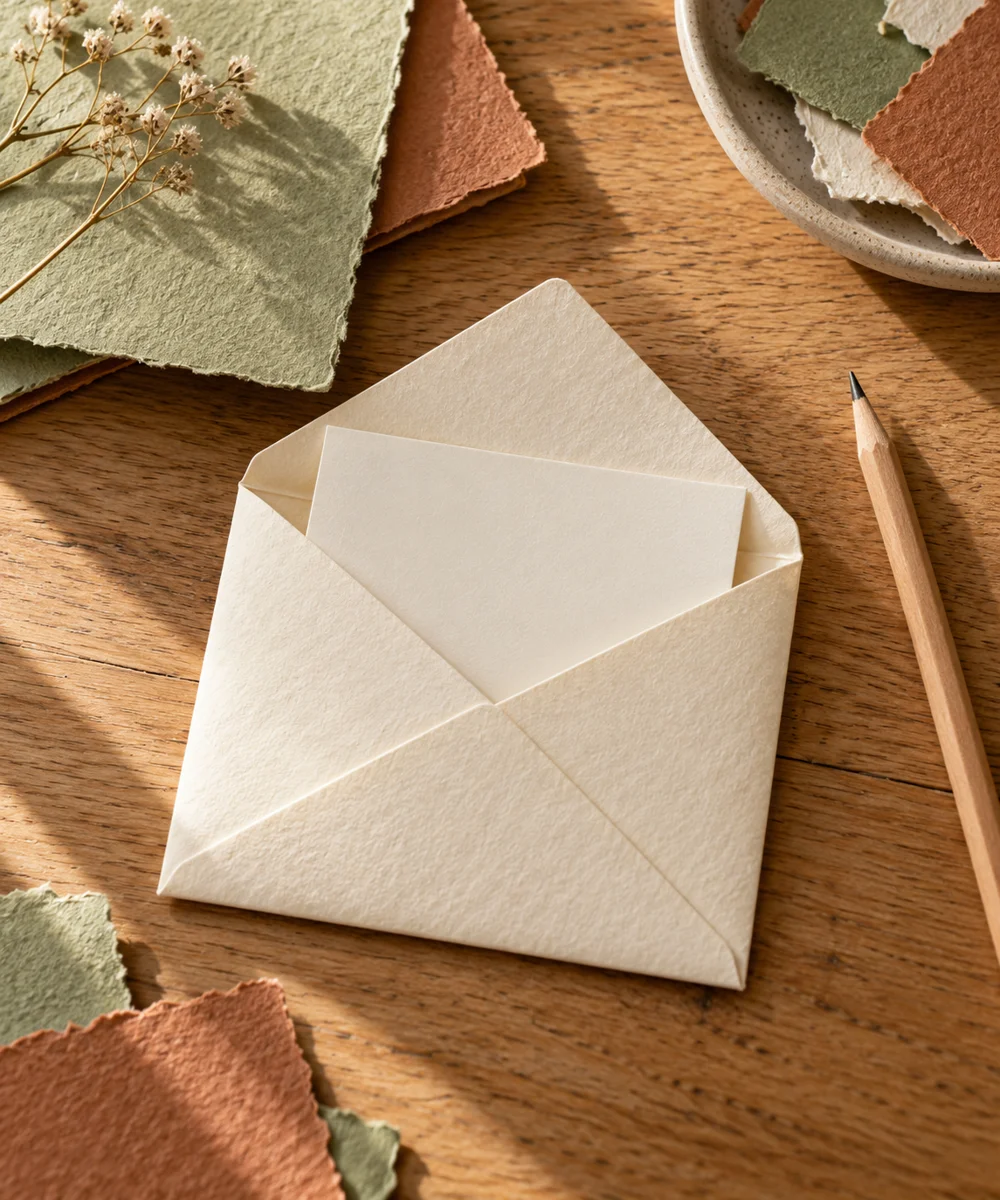
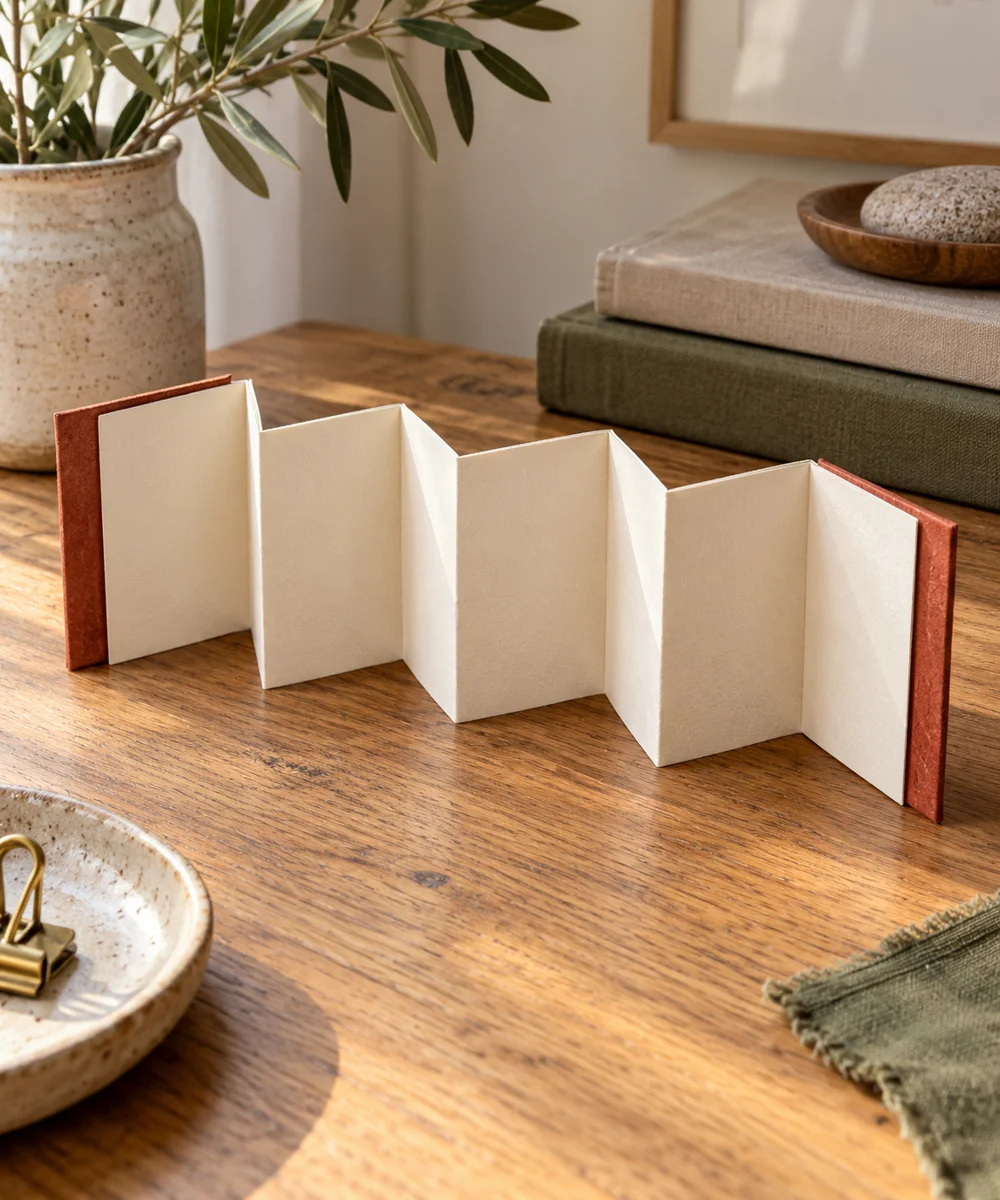
A USEFUL HANDMADE PROJECT
Make a Paper Quilling Coil Study
A small coil study compares how rolled paper changes when released, tightened, or pinched.
Start with your materials ↓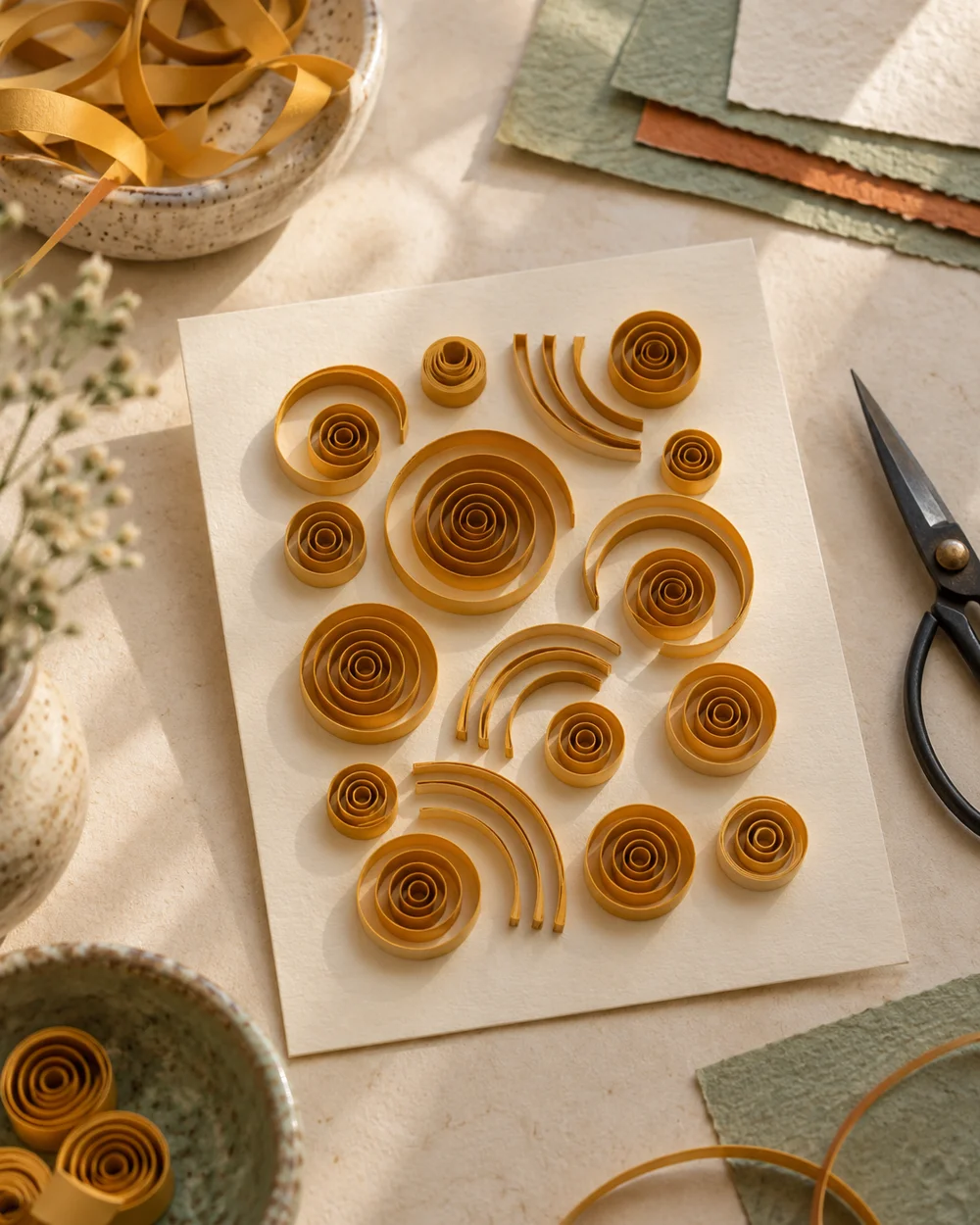
WHAT TO GATHER
Your starting kit.
- Plain paper or cardstock suited to the folds described below
- A ruler, pencil, and scissors
- Paper glue and scrap paper for protecting the work surface
- A blunt folding tool for scored creases
- A blunt quilling tool
STEP 01
Measure and prepare
Cut six paper strips 5 mm wide and about 200 mm long.
STEP 02
Lay out the construction
Roll a strip around a blunt quilling tool, release it onto scrap paper, and adjust the coil width before gluing its end.
STEP 03
Join and shape
Compare tight circles, loose circles, and pinched teardrops. Attach dried shapes to a card in a simple nonfigurative grid.
STEP 04
Check the result
Use a tiny amount of paper glue on the coil end so the rolled layers remain visible. Let glued joints dry according to the adhesive instructions. Compare the finished shape with its intended use: moving parts should move freely, open pockets should remain open, and supporting folds should sit level. Trim only a little at a time if a paper edge catches.
STEP 05
Finish and keep
Remove temporary pencil guides with a clean eraser where the paper allows it. Store the finished piece somewhere dry and avoid putting pressure on raised or rolled details. Keep your first scrap-paper version nearby if you want to change the dimensions next time.
Before you begin.
Can I change the paper size?
Yes. Make a scrap version first and keep the same fold sequence. Where a piece wraps another object, measure the actual object and add space for its thickness instead of enlarging only one dimension.
What should I check before beginning?
Use a tiny amount of paper glue on the coil end so the rolled layers remain visible.
Original editorial project guidance. Images are AI-generated concepts, not photographs of tested finished projects. Practice on inexpensive materials and follow tool and material instructions. Sources & approach.
Save to Pinterest ↗KEEP THE THREAD GOING