A USEFUL HANDMADE PROJECT
Make a Rounded-Flap Paper Envelope
A rounded closing flap gives a handmade envelope a softer outline while keeping its inner pocket clear.
Start with your materials ↓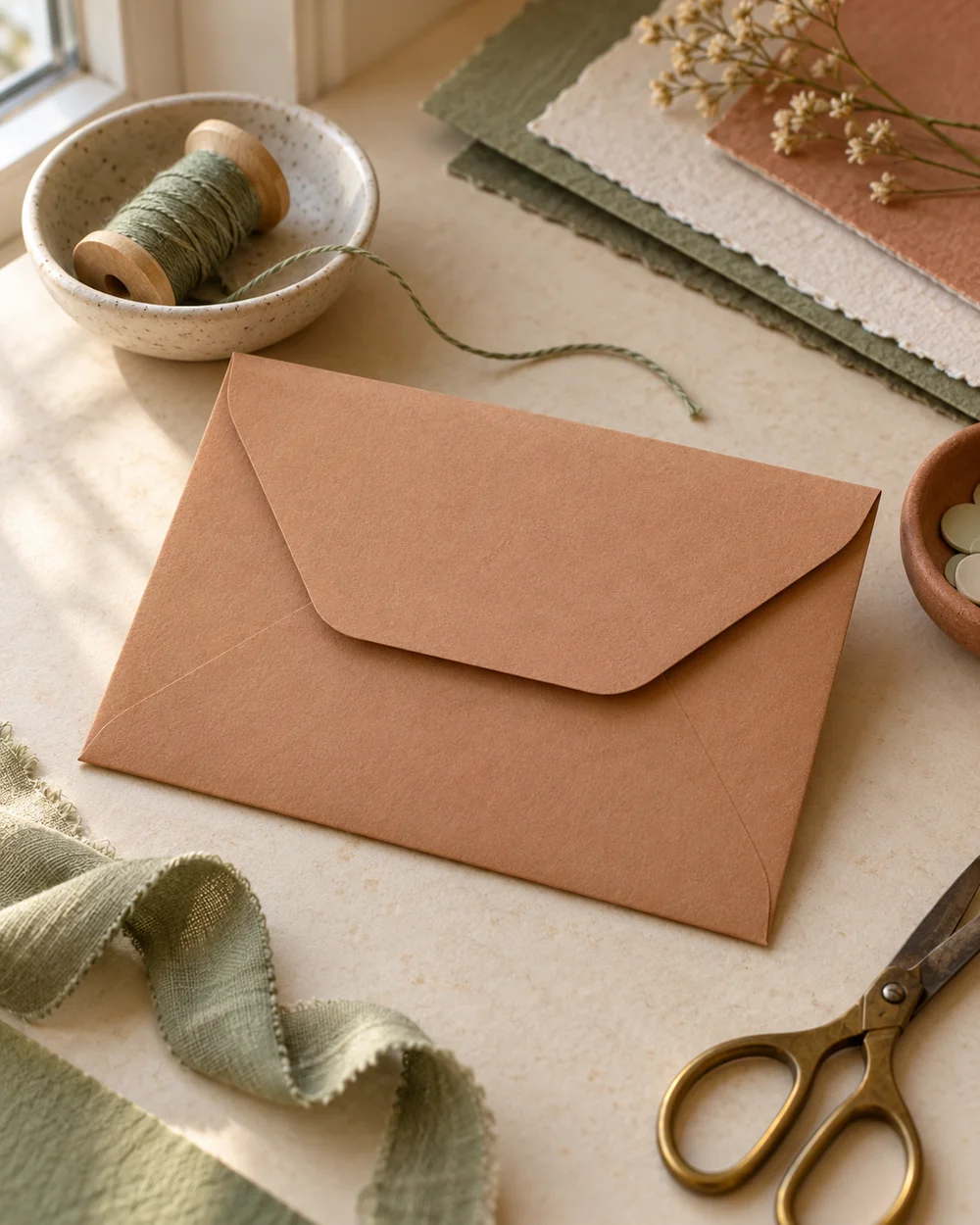
WHAT TO GATHER
Your starting kit.
- Plain paper or cardstock suited to the folds described below
- A ruler, pencil, and scissors
- Paper glue and scrap paper for protecting the work surface
- A blunt folding tool for scored creases
STEP 01
Measure and prepare
Center a blank A6 card on a paper rectangle roughly 240 by 220 mm.
STEP 02
Lay out the construction
Fold both sides across the card with a small overlap, then fold the bottom up. Remove the card and round the top flap corners with scissors.
STEP 03
Join and shape
Glue the bottom flap only where it overlaps the side flaps. Slip the card back inside after drying and fold the top down.
STEP 04
Check the result
Keep glue away from the inner pocket; test your paper dimensions with scrap before cutting decorative stock. Let glued joints dry according to the adhesive instructions. Compare the finished shape with its intended use: moving parts should move freely, open pockets should remain open, and supporting folds should sit level. Trim only a little at a time if a paper edge catches.
STEP 05
Finish and keep
Remove temporary pencil guides with a clean eraser where the paper allows it. Store the finished piece somewhere dry and avoid putting pressure on raised or rolled details. Keep your first scrap-paper version nearby if you want to change the dimensions next time.
Before you begin.
Can I change the paper size?
Yes. Make a scrap version first and keep the same fold sequence. Where a piece wraps another object, measure the actual object and add space for its thickness instead of enlarging only one dimension.
What should I check before beginning?
Keep glue away from the inner pocket; test your paper dimensions with scrap before cutting decorative stock.
Original editorial project guidance. Images are AI-generated concepts, not photographs of tested finished projects. Practice on inexpensive materials and follow tool and material instructions. Sources & approach.
Save to Pinterest ↗KEEP THE THREAD GOING