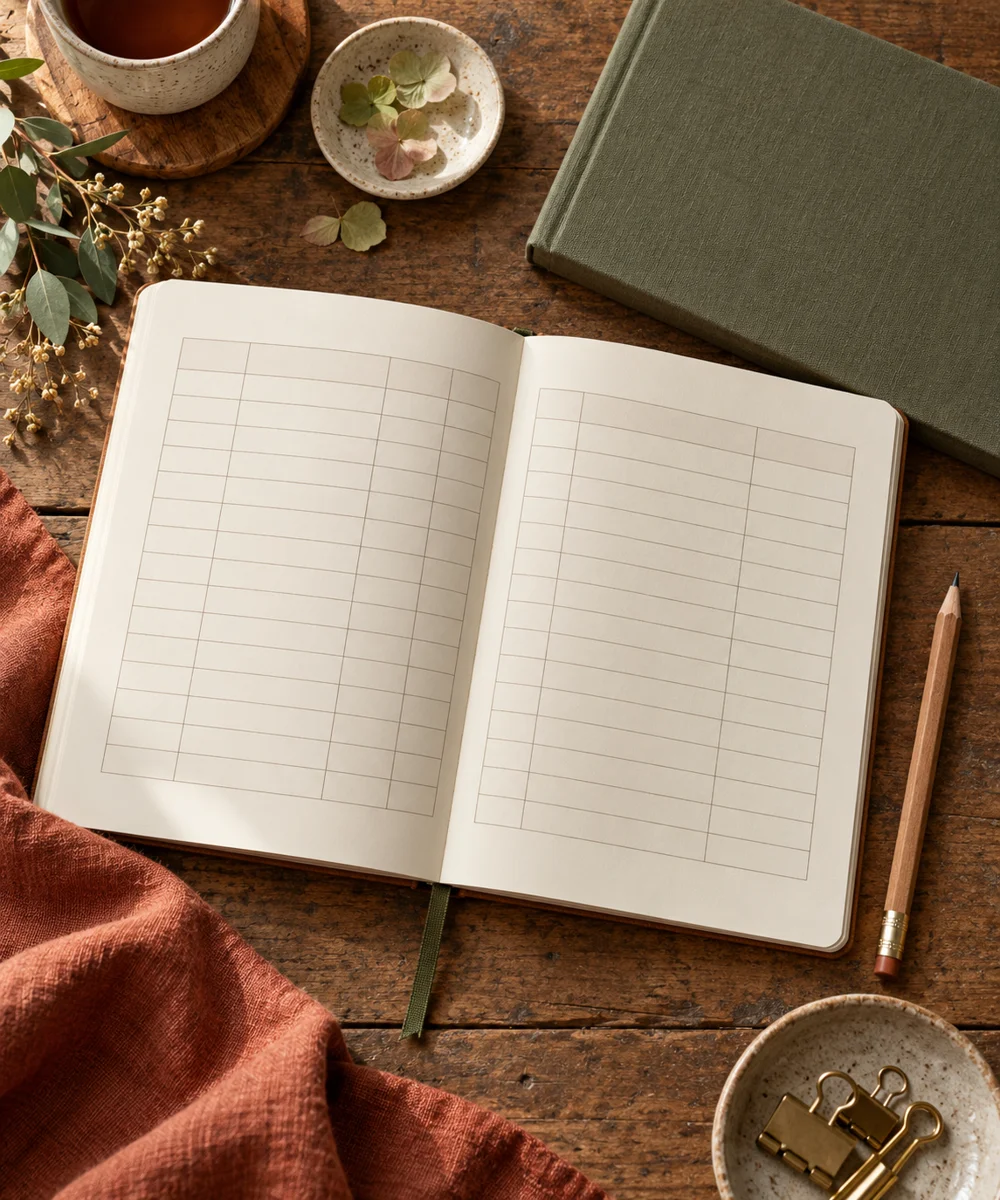
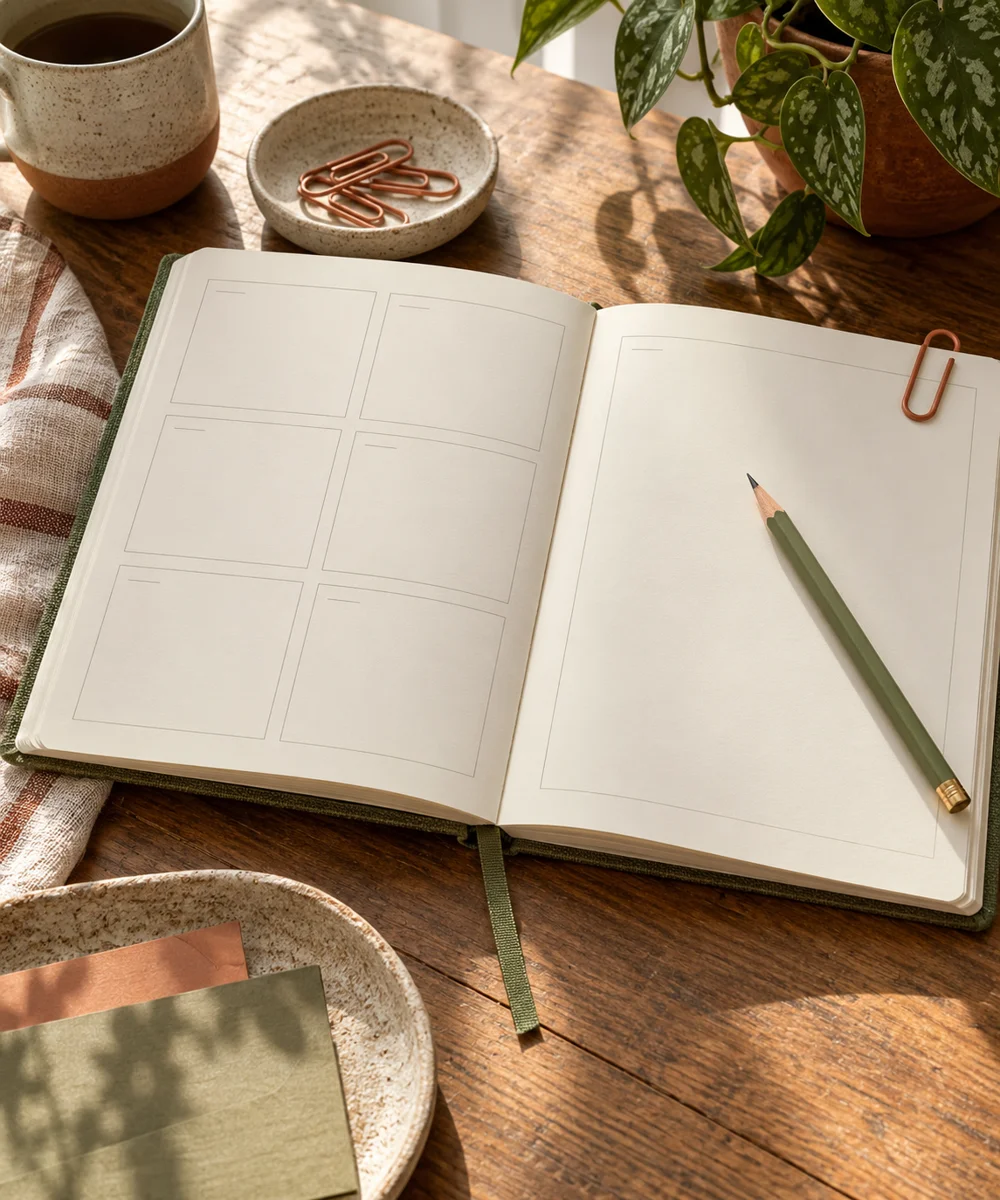
SMALL DETAILS, KEPT ON PAPER
Start a Simple Botanical Observation Journal
A botanical journal can begin with one ordinary leaf and a few careful observations. You do not need to identify a rare plant or make a polished illustration. Record what is in front of you: its outline, the direction of its veins, a change in color, and where you noticed it. A simple dated page becomes more useful when the observation is specific and the gaps in your knowledge are left honest.
Start with your materials ↓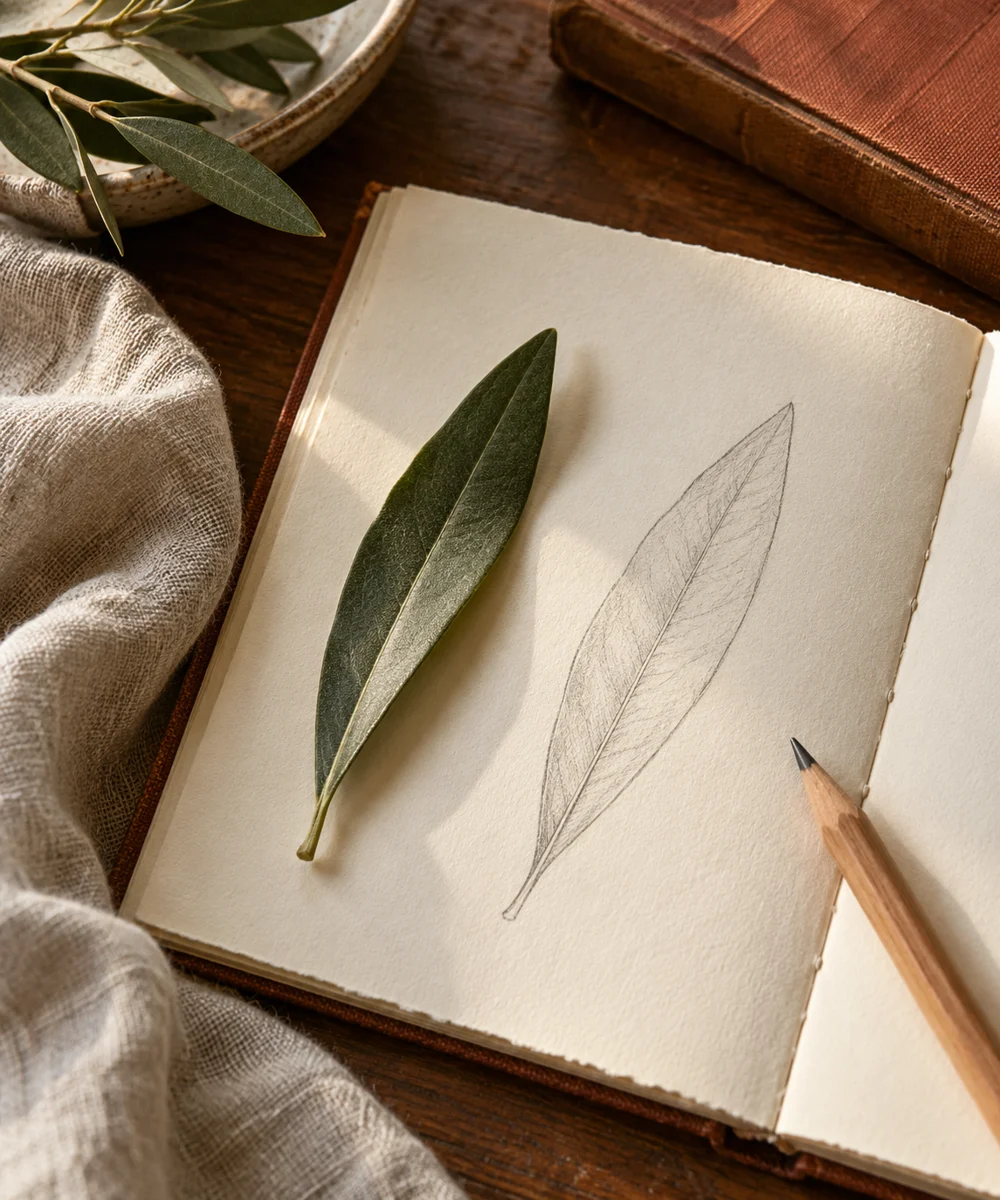
WHAT TO GATHER
Your starting kit.
- A notebook or our observation-page printable
- A pencil
- A fallen leaf you may lawfully collect, or a plant to observe in place
STEP 01
Choose an accessible subject
Observe a familiar plant in your own space or a fallen leaf where collection is permitted. Do not pick protected plants, disturb habitats, or handle an unfamiliar plant for the sake of a journal page. A photograph or a view through a window is enough.
STEP 02
Record the setting
Add the date and a general setting such as a balcony pot or neighborhood path. Avoid publishing a precise private location. Note weather or light conditions if they help explain what you saw, keeping observation separate from guesses about the plant.
STEP 03
Draw the outer shape
Make a light outline in pencil, then look again before adding detail. Compare the leaf length with its width and notice the tip and stem connection. A modest drawing with accurate observations is more useful than copying a decorative leaf from memory.
STEP 04
Add three observations
Choose details you can actually see: a serrated edge, a pale underside, or paired leaves on a stem. If you do not know the species, write that it is unidentified. Do not infer whether a plant is edible or medicinal from its appearance.
STEP 05
Return to the same subject
Observe the plant again on another day and add a new dated note. Photograph or sketch changes instead of collecting more material. This creates a personal record of attention without requiring a large supply collection or a perfect finished sketch.
Before you begin.
Must I know the plant name?
No. Record visible features and leave identification open. A qualified local source may help later, but the journal itself does not establish an identification.
Can I press a leaf into the notebook?
Only use material you are allowed to collect and can handle appropriately. Dry it fully before storing it; a photograph is a simple alternative.
Original editorial project guidance. Images are AI-generated concepts, not photographs of tested finished projects. Practice on inexpensive materials and follow tool and material instructions. Sources & approach.
Save to Pinterest ↗KEEP THE THREAD GOING