A PAGE FOR EVERY CHAPTER
Set Up a Reading Log You Will Actually Use
A reading log works best when it takes less effort than the reading itself. Instead of tracking every page or setting an ambitious target, begin with a small record of what you finished and what you want to remember. One spread can hold several books, while a separate notes page gives longer thoughts somewhere to go. This layout is deliberately light: use it for novels, practical guides, essays, or any reading that matters to you.
Start with your materials ↓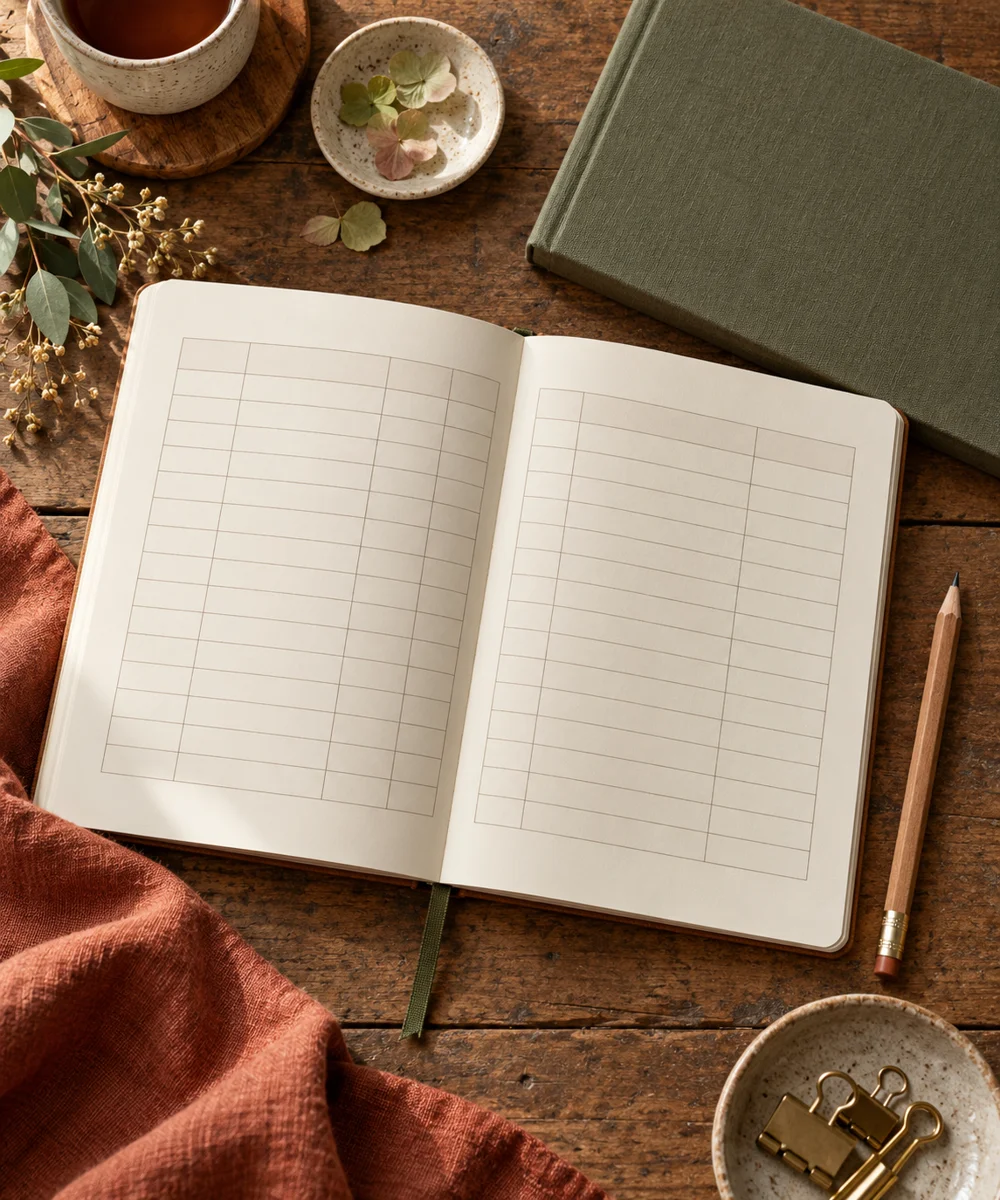
WHAT TO GATHER
Your starting kit.
- A notebook or our reading-log printable
- A pen or pencil
- A ruler if using an unruled notebook
STEP 01
Choose your minimum record
Start with three fields: book title, author, and date finished. Add a single line for a thought or useful idea. Avoid including a field simply because another person tracks it; each extra column should earn its place.
STEP 02
Leave room for real titles
Give the title column more width than the date column. If your notebook is narrow, use stacked entries instead of a table. Test one entry in pencil before ruling a complete spread, especially if the books you read have long names.
STEP 03
Separate notes from totals
Use a small page reference beside an entry when you have longer notes elsewhere. A log is an index, not a requirement to fit every thought into one cell. Leave ratings out if choosing a score makes recording a book feel like work.
STEP 04
Record a useful takeaway
Write one sentence about what stayed with you: a question, a practical technique, or a reason you would recommend the book. Use your own words. If you copy a short quotation, mark it as a quotation and record its page.
STEP 05
Review without a target
Look back occasionally to notice what you enjoyed. Move unfinished books to a separate list if that is useful, and allow yourself to stop reading something that does not fit your interests. The page is a record, not a measure of your worth or productivity.
Before you begin.
Should I log unfinished books?
Only if that helps you. A separate list can preserve the title and where you stopped without mixing it with finished books.
Can I use this for children’s reading?
You can adapt the fields and writing space. Keep it supportive and age-appropriate, and let the reader describe the book in their own way.
Original editorial project guidance. Images are AI-generated concepts, not photographs of tested finished projects. Practice on inexpensive materials and follow tool and material instructions. Sources & approach.
Save to Pinterest ↗KEEP THE THREAD GOING