A RECORD OF WHAT REMAINS
Organize Fabric Scraps in a Swatch Notebook
A swatch notebook helps you see useful fabric before buying more. Attach a small sample and record what you actually know about the remaining piece, including its approximate size and storage location. Treat unknown fiber content as unknown. This is an inventory for your own projects, rather than a method for identifying fabrics by appearance.
Start with your materials ↓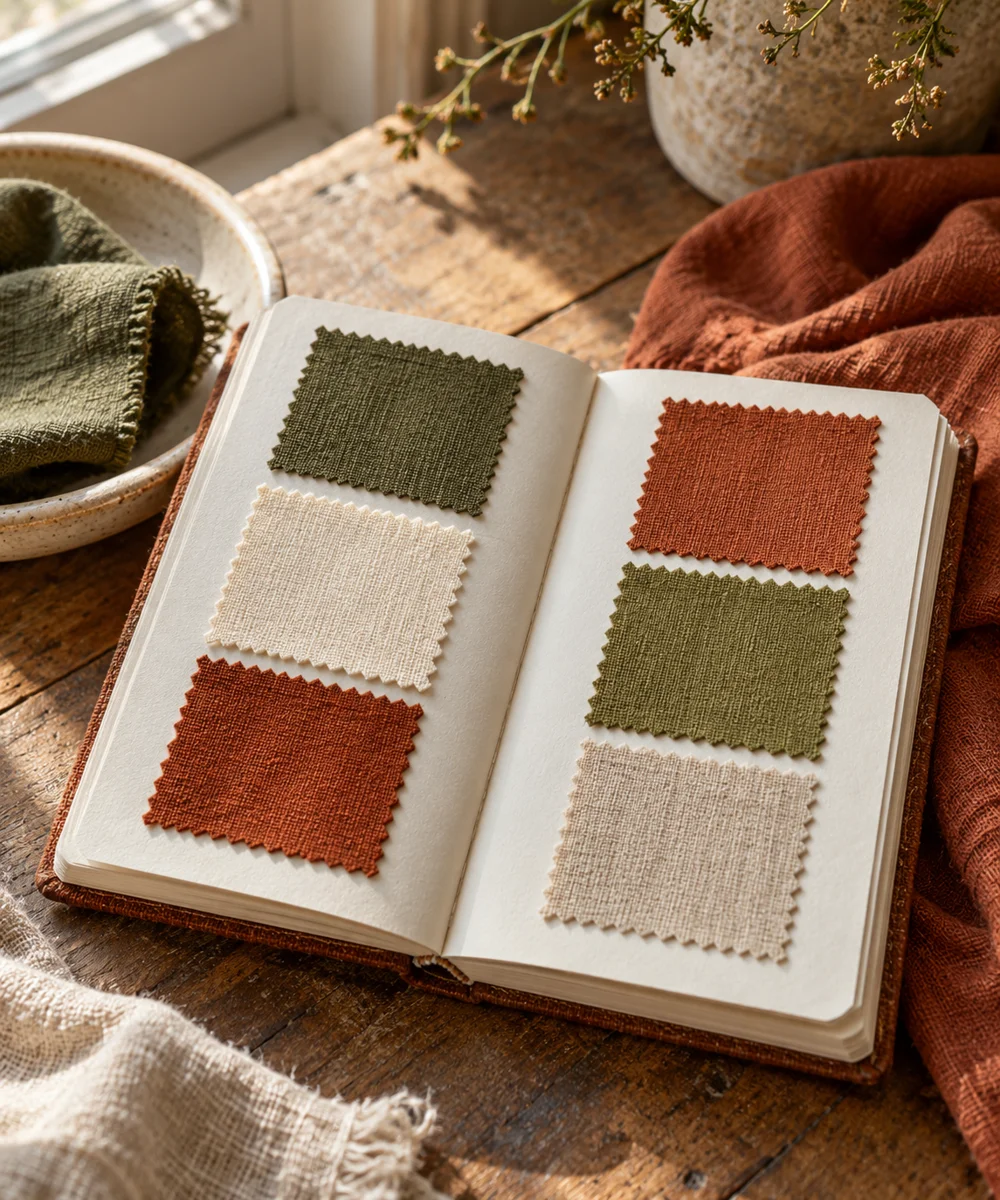
WHAT TO GATHER
Your starting kit.
- Notebook with sturdy pages
- Clean fabric offcuts and scissors
- Paper envelopes or mounting tape suitable for your page
- Pencil and ruler
STEP 01
Sort clean usable scraps
Gather a manageable handful of clean, dry pieces. Set aside damaged or dirty material for appropriate cleaning or disposal. Group the remaining fabric by the way you expect to use it, such as woven practice pieces, lining scraps, or decorative patches.
STEP 02
Cut a small representative sample
Take a modest square from an existing offcut rather than cutting into the best part of a large piece. Keep enough surface visible to show the texture. Handle fraying edges gently and collect loose threads from your table.
STEP 03
Attach without crowding the page
Put the swatch in a small paper envelope attached to the page, or secure only its top edge with suitable mounting tape. Leave the rest movable so you can feel it. Avoid thick piles that prevent the notebook from closing.
STEP 04
Record known details
Note the measured dimensions of the remaining piece and where it is stored. Copy care information only when it comes from a reliable original label; otherwise write unknown. Add a short observation about stretch or weight without guessing its fiber content.
STEP 05
Keep the inventory current
When you use a piece, cross out the old measurements and record what remains. Keep the swatch even after finishing a project if it helps you remember the material, but mark it used up so the notebook does not promise fabric you no longer own.
Before you begin.
Can I identify fibers from a sample?
Appearance alone is unreliable. Keep the original label when available and mark uncertain information as unknown.
What if my notebook becomes bulky?
Use fewer swatches per book or keep samples in separate envelopes with a thin written index.
Original editorial project guidance. Images are AI-generated concepts, not photographs of tested finished projects. Practice on inexpensive materials and follow tool and material instructions. Sources & approach.
Save to Pinterest ↗KEEP THE THREAD GOING