A GENTLE PLACE TO BEGIN
Sew a Running-Stitch Leaf Sampler
A running stitch is a line of small in-and-out stitches. Used around a simple leaf outline, it becomes a manageable first embroidery sampler: a small shape, one color, and no need to fill an entire hoop. Work on a scrap before choosing fabric for a finished item. The goal is to learn how thread tension and stitch spacing feel, not to produce identical leaves on the first attempt.
Start with your materials ↓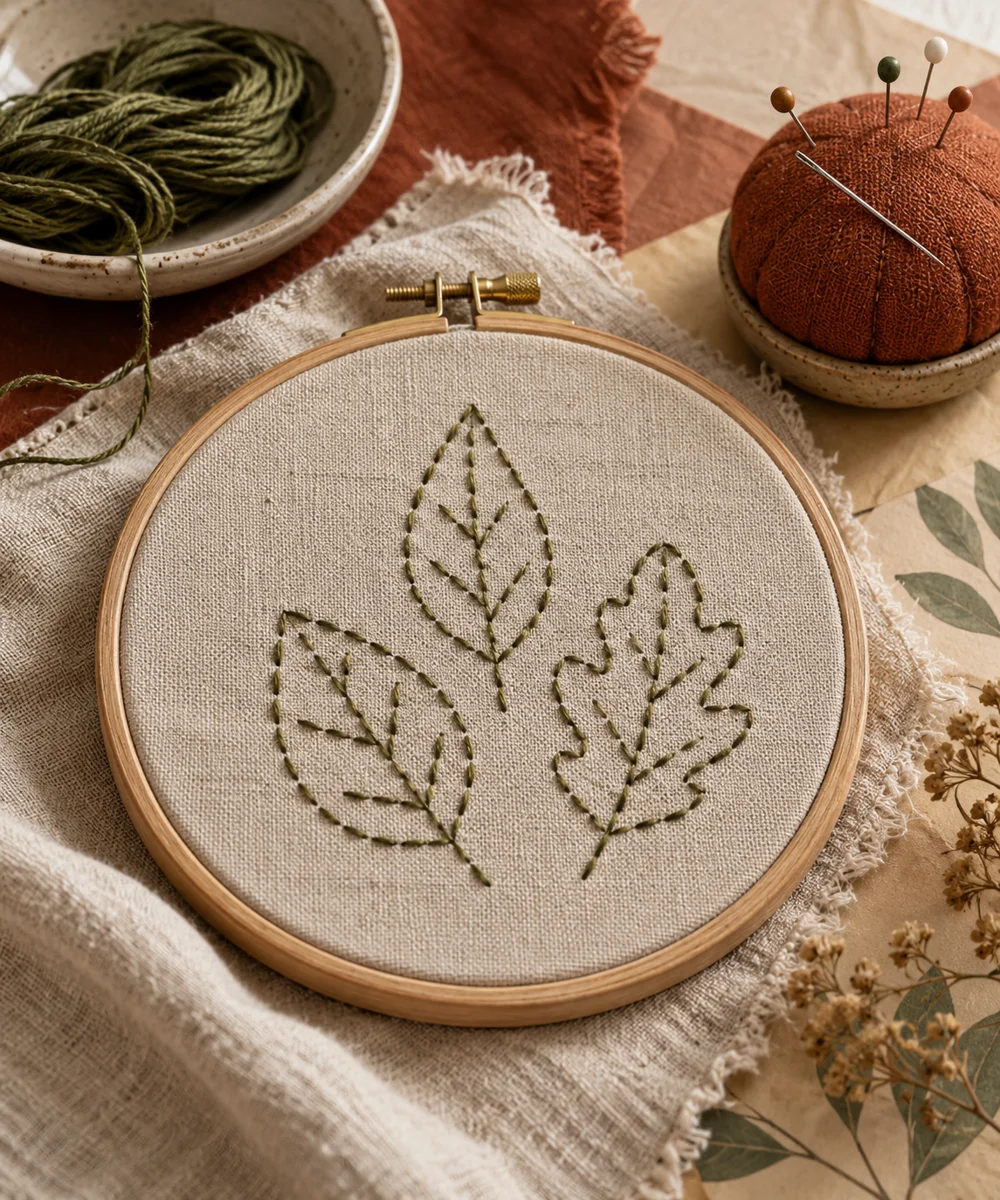
WHAT TO GATHER
Your starting kit.
- A scrap of woven cotton or linen
- An embroidery needle suitable for your thread
- Embroidery thread and small scissors
- An optional hoop and removable fabric marker
STEP 01
Draw a simple outline
Sketch one leaf as two gentle curves meeting at a tip, with a short center vein. Keep it large enough to place stitches comfortably. Test any marking method on a scrap and follow its removal directions before applying it to a finished fabric.
STEP 02
Prepare a short thread
Cut a manageable length of thread and thread the needle. A very long strand can tangle and abrade as it passes through fabric. Anchor the starting end on the reverse using a method suited to your fabric, and keep needles away from children and pets.
STEP 03
Work around one edge
Bring the needle up on the outline and down a short distance ahead. Bring it up again after a similar gap. Repeat along the curve, turning the fabric as needed. Start with visible, comfortable stitches rather than trying to make them extremely small.
STEP 04
Check the tension
Lay the work flat every few stitches. The thread should rest on the surface without pulling the fabric into puckers. If it gathers, loosen the last stitches before continuing. A hoop can support the fabric, but it should not stretch the weave out of shape.
STEP 05
Finish and compare
Continue around the leaf and add a simple center line if you wish. Secure the end on the reverse, trim spare thread, and remove the marking as directed. Compare the beginning and end of the line to see how your spacing changed. Keep the sampler as a reference.
Before you begin.
How many strands of thread should I use?
Choose a thickness that passes through your fabric comfortably and gives the line you want. Try a small sample; thread and fabric combinations vary.
Why does my fabric pucker?
The thread may be pulled too tightly, or the fabric may be stretched unevenly. Loosen the affected stitches and try again with gentler tension.
Original editorial project guidance. Images are AI-generated concepts, not photographs of tested finished projects. Practice on inexpensive materials and follow tool and material instructions. Sources & approach.
Save to Pinterest ↗KEEP THE THREAD GOING