A USEFUL HANDMADE PROJECT
Create a Glue Test Reference Journal
Small adhesive trials preserve observations about curl, residue, and lifting for particular paper-and-glue combinations.
Start with your materials ↓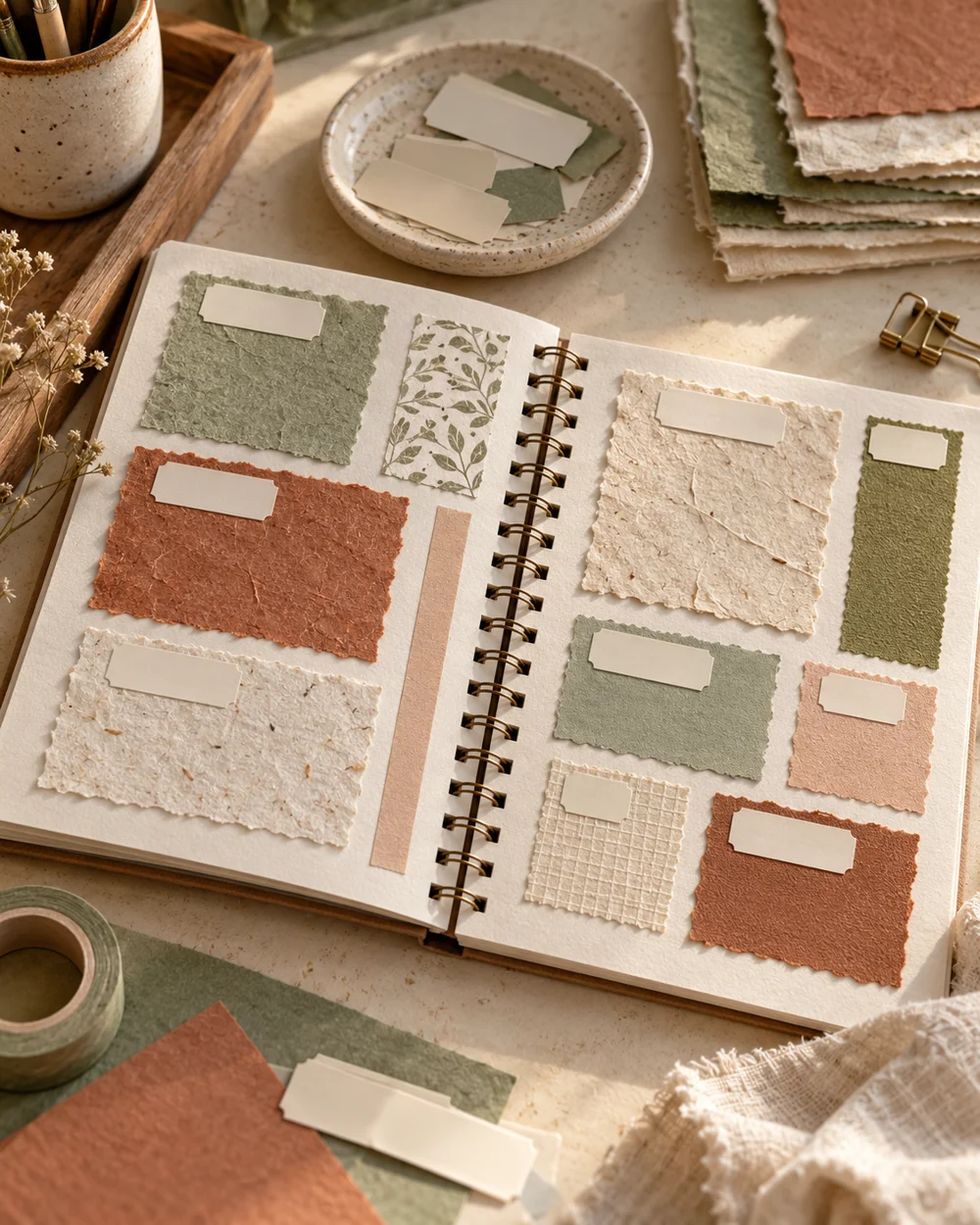
WHAT TO GATHER
Your starting kit.
- A notebook with enough blank space for the layout
- A pencil, ruler, and the pens you want to use
- Small material samples when the individual project calls for them
- Removable paper corners or suitable tape for attaching samples
STEP 01
Measure and prepare
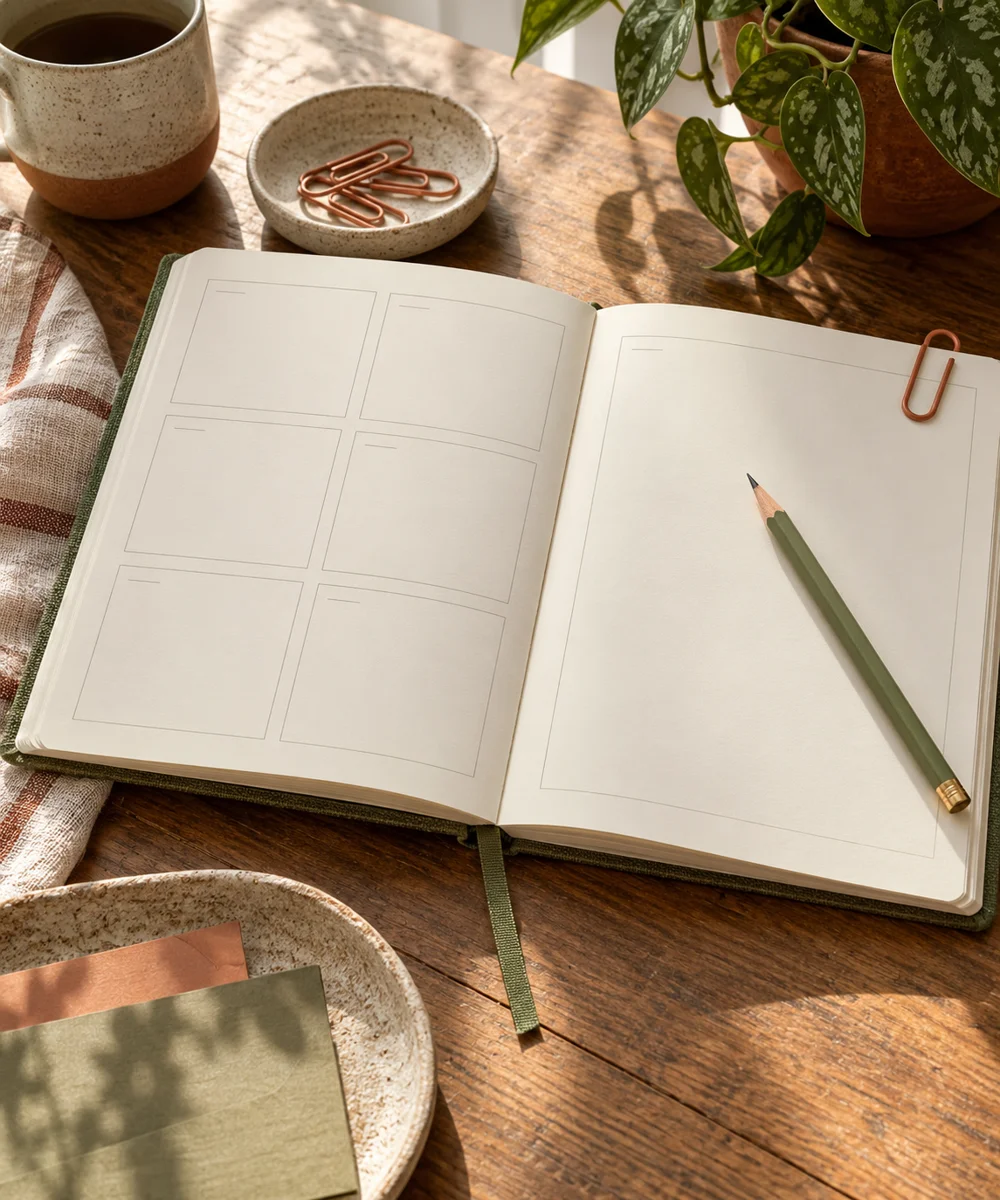
Divide a spread into four adhesive trials with matching paper rectangles.
STEP 02
Lay out the construction
Attach each rectangle with a different glue you already own, using the maker directions and the same small coverage area.
STEP 03
Join and shape
Let the samples dry before noting curl, visible residue, and whether the edges lift when gently handled.
STEP 04
Check the result
Record the exact paper and adhesive; observations cannot be generalized to every material combination. Try the layout with one real entry before drawing repeated pages. Check that you can find the date, source, and next action without reading every line. Widen cramped columns now, while the rest of the spread is still empty.
STEP 05
Finish and keep
Date the first entry and leave some unused space for corrections. Revisit the spread when you next use the related materials or complete the related task. Carry forward information that remains useful and cross out entries that no longer apply.
Before you begin.
Do I need to decorate the page?
No. A ruled layout and a few accurate entries are enough. Add color only if it makes the information easier to find; an elaborate border is optional.
What should I check before beginning?
Record the exact paper and adhesive; observations cannot be generalized to every material combination.
Original editorial project guidance. Images are AI-generated concepts, not photographs of tested finished projects. Practice on inexpensive materials and follow tool and material instructions. Sources & approach.
Save to Pinterest ↗KEEP THE THREAD GOING