A USEFUL HANDMADE PROJECT
Create a Plant Watering Observation Page
A watering observation page records one plant’s actual conditions and actions instead of imposing a shared calendar interval.
Start with your materials ↓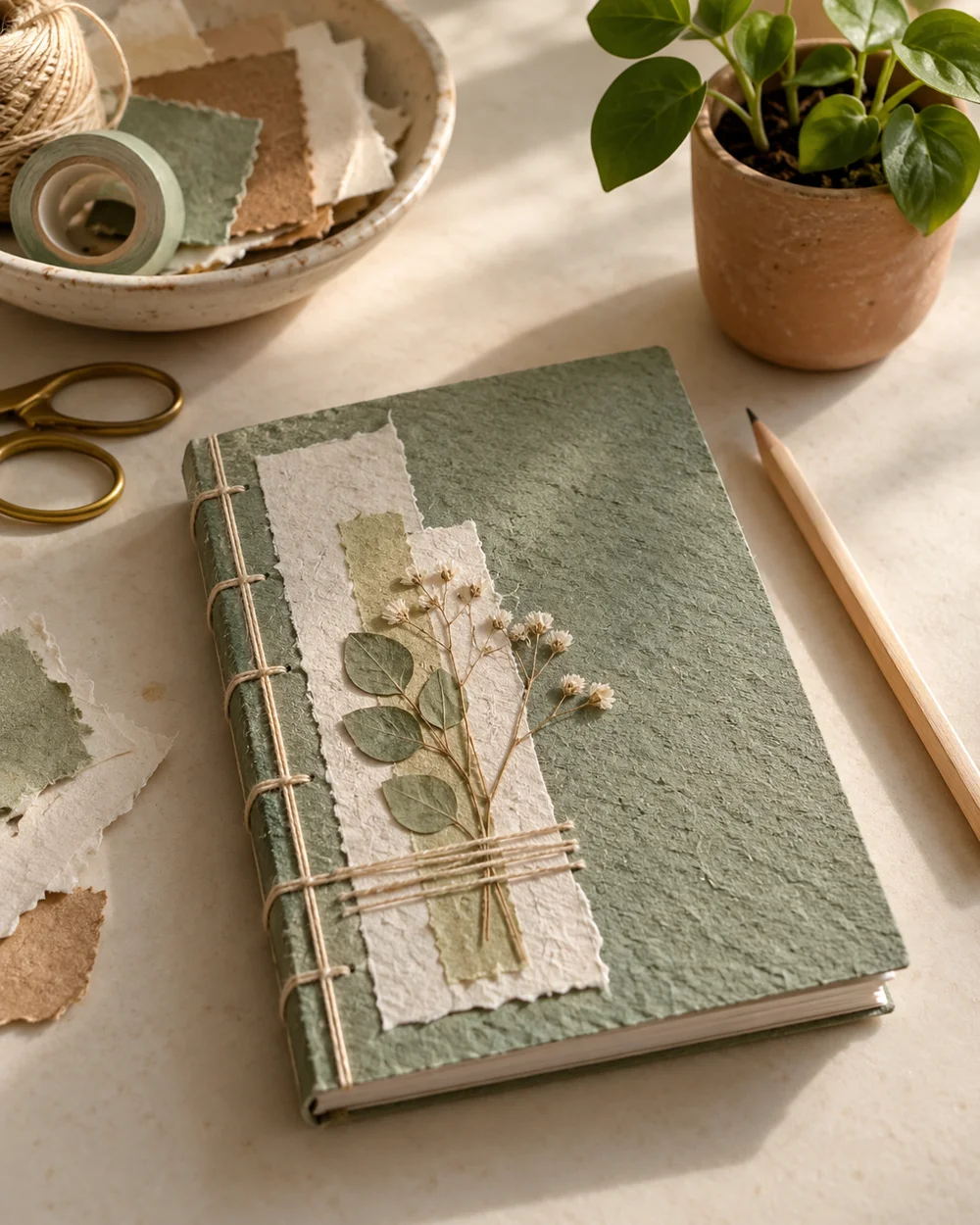
WHAT TO GATHER
Your starting kit.
- A notebook with enough blank space for the layout
- A pencil, ruler, and the pens you want to use
- Small material samples when the individual project calls for them
- Removable paper corners or suitable tape for attaching samples
STEP 01
Measure and prepare
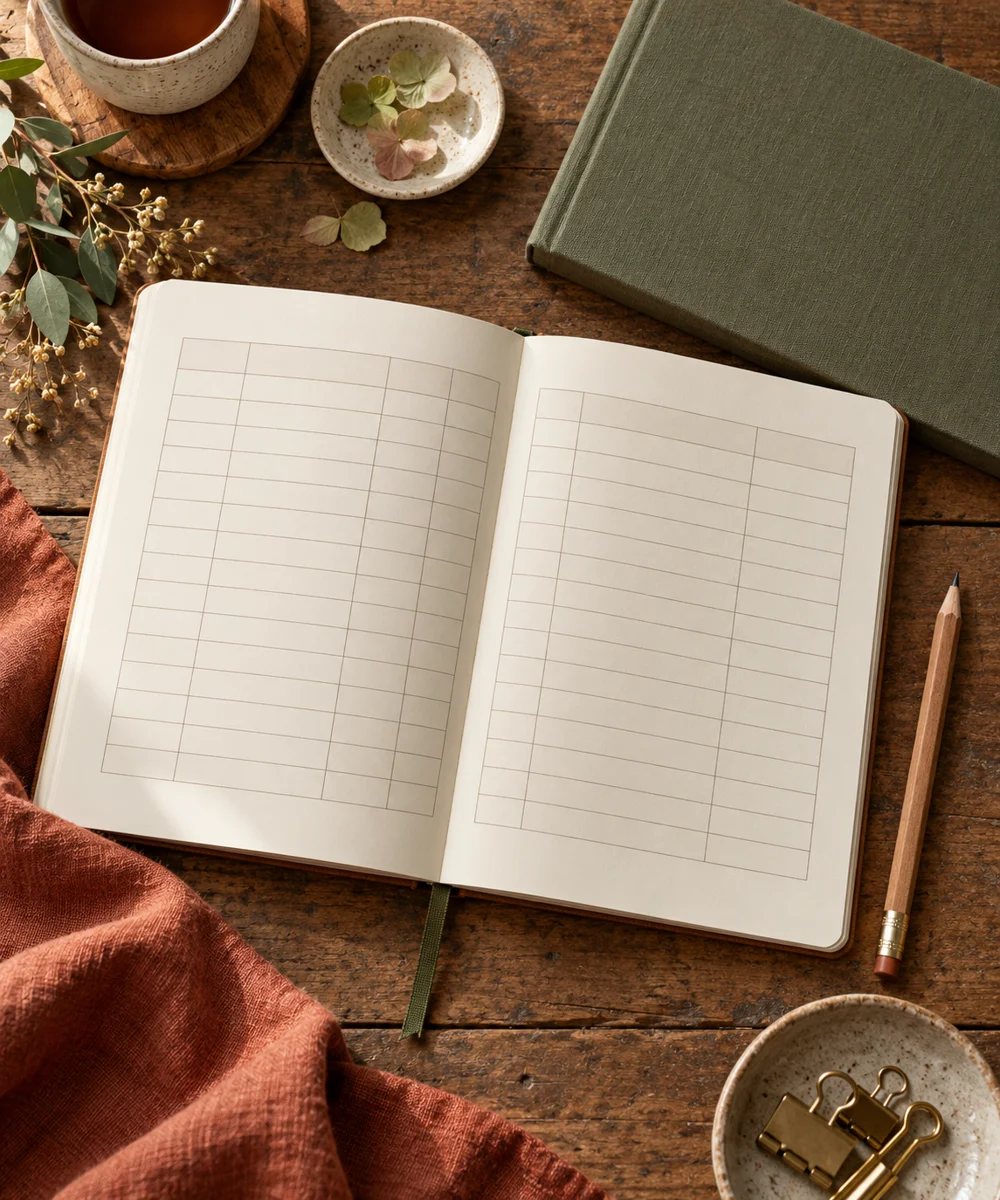
Choose one plant and reserve a page with date, soil observation, and action columns.
STEP 02
Lay out the construction
Record what you actually notice before watering, including whether the pot feels unusually light and whether the soil surface is dry.
STEP 03
Join and shape
Log water given only when appropriate for that plant and follow its care needs rather than a universal interval.
STEP 04
Check the result
This is an observation record, not a rule to water every plant on the same schedule. Try the layout with one real entry before drawing repeated pages. Check that you can find the date, source, and next action without reading every line. Widen cramped columns now, while the rest of the spread is still empty.
STEP 05
Finish and keep
Date the first entry and leave some unused space for corrections. Revisit the spread when you next use the related materials or complete the related task. Carry forward information that remains useful and cross out entries that no longer apply.
Before you begin.
Do I need to decorate the page?
No. A ruled layout and a few accurate entries are enough. Add color only if it makes the information easier to find; an elaborate border is optional.
What should I check before beginning?
This is an observation record, not a rule to water every plant on the same schedule.
Original editorial project guidance. Images are AI-generated concepts, not photographs of tested finished projects. Practice on inexpensive materials and follow tool and material instructions. Sources & approach.
Save to Pinterest ↗KEEP THE THREAD GOING